Quantum Roulette Multiplier Rounds: The Volatility Engine Nobody Audits
The multiplier round is not a bonus feature — it is a volatility switch flipped mid-spin, and most players never see the RNG weight table behind it. Quantum roulette multiplier rounds inject a pre-determined multiplier draw into the live wheel cycle, and if you don't understand the trigger frequency, you are bleeding edge to the house on every single spin. 🔥
How the Multiplier Draw Actually Fires
Strip away the studio lighting and the slick dealer presentation. The core mechanic is a secondary random event layered on top of the standard pocket result. Before the ball settles, the engine executes a weighted draw that assigns either a straight-up multiplier, a邻居-number cluster boost, or nothing at all. The published hit rate on straight-up multiplier rounds sits somewhere between one in twelve and one in eighteen spins depending on the provider — but that range is wide enough to hide brutal variance. The house edge doesn't move. Your exposure does.
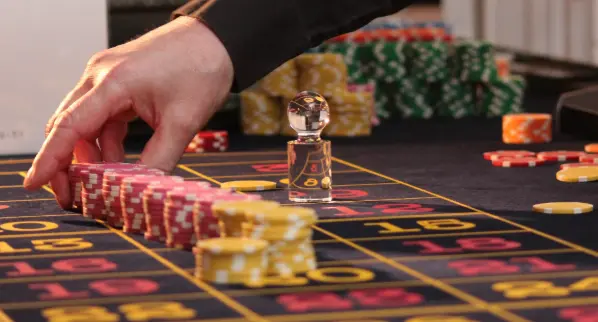
What separates a sharp operator from a sucker is tracking the effective return on multiplier rounds versus flat spins. A 500x straight-up multiplier sounds like a lottery ticket until you calculate that the probability of landing both the number and the qualifying multiplier in the same cycle collapses your expected value to the same 97.3% territory as a standard European wheel. The multiplier is theatre. The math underneath is identical. 🎯
Quantum Roulette Live Sites: Where the Stream Betrays the RNG
Live dealer sites running quantum roulette variants expose more than they realize. Watch the timing between the multiplier announcement and the betting lock — a lag of more than two hundred milliseconds on a "random" reveal is a tell that the draw is server-side pre-resolved rather than genuinely concurrent with the physical spin. Legitimate Quantum Roulette Live Sites synchronize the multiplier reveal to the dealer's call within a tight window. Sloppy platforms don't bother, and that sloppiness is your audit trail.

Cross-reference the multiplier distribution across a thousand logged rounds. A fair engine produces a long-tail distribution with predictable cluster density around the 50x to 100x band. If you see suspicious clumping at exactly 2x and 5x with almost nothing in the mid-range, the platform is capping volatility to protect its float. That is not random. That is a house-protection algorithm wearing a quantum label. 😤
The Multiplier Band Skew You Must Exploit
Here is the edge most players miss entirely. Multiplier rounds that apply to neighbor clusters rather than single numbers create a temporary coverage arbitrage. When a cluster multiplier is live, the effective payout on a five-number neighbor bet spikes disproportionately relative to the probability shift. Track which Quantum Roulette Multiplier Rounds trigger cluster boosts versus straight-up boosts, and size your neighbor coverage accordingly. The engine weights these two multiplier types differently, and the weighting is not symmetric across providers.
Providers running on older RNG cores tend to over-index on cluster multipliers because the payout computation is cheaper. Newer cores distribute more evenly but introduce a cooldown period after a high-multiplier hit — typically four to six qualifying spins where the draw probability drops to near zero. Detect the cooldown and you detect the reset. That reset window is the single most exploitable pattern in the entire multiplier architecture, and it exists because the engine designers prioritized payout smoothing over true independence. 🧠
Reading the Cycle Reset Before It Costs You
Stop treating multiplier rounds as pure chance. They are a scheduled volatility injection with detectable periodicity. Log every multiplier event with its spin index, calculate the inter-event gap, and watch for the cooldown signature. Once you map the reset cadence on a specific Quantum Roulette Multiplier Rounds table, you can time your stake escalation to the post-cooldown re-entry window where the draw probability climbs back to baseline.
The providers will never publish the cooldown length. They will never disclose the cluster-versus-straight weighting. But every one of those parameters leaves a statistical fingerprint across enough rounds, and the fingerprint resets on a fixed cycle that the engine cannot randomize without breaking its own payout budget. That fixed cycle is the crack in the quantum facade.