Session Timer Slot: Why Should You Set One?
Every second you leave a slot session running without a hard stop is a second the house edge quietly eats your bankroll while your decision-making degrades into pure reflex. The session timer slot mechanism exists because human willpower is a joke against a machine engineered to keep you spinning — and if you are not setting one, you are not playing, you are being played. 😤
The Hidden Psychology of the Endless Spin Cycle
Slot cabinets and their digital twins are built around something operators call "time-on-device." The longer you sit, the more spins you fire, and the more the math grinds you down. A session timer slot is the only circuit breaker that fights back. It forces a hard boundary into a system that was designed to have none. When you set one, you are not being cautious — you are being tactical, and that is the difference between a player and a mark.
The brutal truth: fatigue kills judgment around the twenty-minute mark for most people. Reaction times slip, bet sizing creeps upward, and the "just one more spin" loop locks in. A timer injects a cold, mechanical interruption right when your brain is most vulnerable. Session timer slot discipline is not optional — it is the single highest-leverage control you have over the machine.
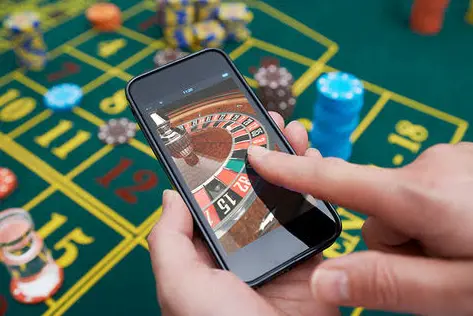
Bankroll Protection Through Forced Intervals
Here is the mechanic that matters: a timer converts your bankroll from a slowly draining bucket into a series of closed, auditable sessions. You walk in with a number, you leave with data. Without a timer, your losses blur together and you cannot tell a bad run from a leak in your own behavior. With one, every session becomes a clean data point. That is how sharp players actually improve — not through hunches, but through structured review of bounded play.
Set the interval based on your average spin rate and stake size, not on vibes. Fifteen to thirty minutes is the sane range for most stake levels. Hit the timer, stop, log the result, walk away for at least ten minutes. 🧠 The players who skip this step are the exact players the house edge was designed to feast on.
Algorithmic Discipline and the Volatility Trap
Modern slots use volatility profiles that spike without warning. A timer does not care about hot streaks or cold streaks — it just fires. That mechanical indifference is the whole point. RNG-driven volatility is designed to create emotional spikes, and emotional spikes are where your money dies. A session timer slot routine strips the emotion out of the loop by making the stop decision before the spin, not during it.

Configuring the Timer Like a Technician
Do not set a timer and then ignore it. That is worse than never setting one because it trains you to override your own rules. Hard stop means hard stop — the software fires, you close the session, period. Use the timer alongside a loss limit and a win limit so the session has three walls, not one. The players who actually survive long-term treat the timer as infrastructure, not a suggestion. 🛠️
Track your average session length against your net result over fifty sessions. If your results go negative after the thirty-minute mark, your timer should be set to twenty-five. The data tells you where your edge dies, and the timer is how you enforce the finding. That is the entire engineering logic: measure the decay, then cut the line before the decay cuts you.