The Cold Math Behind Let It Ride Table Game
Most players bleed money on the Let It Ride table game because they treat it like a slot machine with cards, completely ignoring the three-bet structure that defines every hand. The brutal truth is simple: this game punishes greed at the worst possible moment and rewards disciplined pull-backs like almost nothing else on the casino floor. The Let It Ride table guide you actually need starts with understanding that your first two bets are not commitments — they are options you can yank back at two precise decision points. That single mechanical fact separates winners from the herd. 🎯
Why the Pull-Back Mechanism Changes Everything
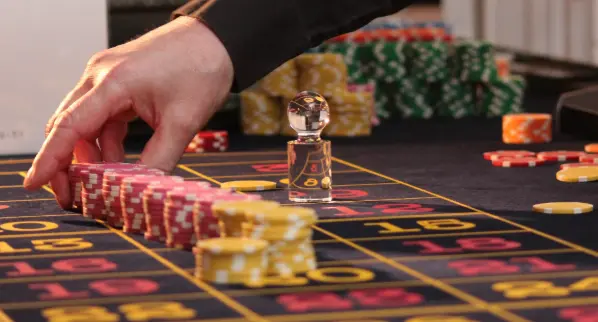
Here is the hardware-level reality of the felt. You place three equal bets in three circles. After seeing your three hole cards plus two community cards, you can pull back bet number one. After the first community card is revealed, you can pull back bet number two. Bet number three always stays. This is not a gimmick — it is a mathematical option that the house prices into its edge. The strategy cards floating around most pit bosses are stale, and the real optimal play hinges on a decision tree that shifts the second you hold a pair versus a three-flush. The Casino Table Game Let It Ride variant demands you memorize exactly four hand thresholds or you are donating your bankroll.
The Four Thresholds the Dealers Never Explain
Pull back your first bet unless you hold a winning pair of tens or better, or a three-card royal draw, or a three-card straight flush, or any paying pair. That is it. Do not get romantic about a three-card flush to a non-royal — that hand is a trap that drains expected value with every decision. After the first community card drops, pull back bet two unless you now hold a made pair of tens or higher, a four-card royal, a four-card straight flush, or a four-card outside straight. Everything else gets pulled. The dealers will not tell you this because the house relies on tourists who let all three bets ride on garbage. 🔥
House Edge and the Variance You Must Respect
When played with perfect pull-back discipline, the Let It Ride house advantage sits around 3.5 percent. That is not a friendly number, but it beats most carnival games. The variance, however, is savage. The game is built around rare premium hands — the payout schedule jumps hard from a simple pair of tens to a full house, and then explodes for four of a kind, straight flush, and the royal. Your bankroll needs to absorb long dry spells where every pull-back decision is correct and you still lose all three bets. The Let It Ride table guide that ignores variance management is worthless. Cap your session at forty base units and walk when you hit it.

Bet Sizing and the Bonus Side Wager Trap
Many tables offer a five-dollar bonus side bet that pays on premium hands regardless of your main three bets. The paytable on that side wager almost always carries a double-digit house edge. Skip it unless the progressive jackpot has climbed past a mathematically justifiable threshold. For your main bets, flat betting one unit per circle is correct — never press after a win because the pull-back structure already gives you all the leverage you need. The rhythm is mechanical: see cards, decide, pull, decide, pull, reveal, pay or collect.
Reading the Table and Exploiting Dealer Tells
The physical table layout hides a subtle tell. Dealers who expose community cards with a slight hesitation on strong boards often telegraph when a big hand is brewing — not because they cheat, but because human rhythm leaks under pressure. Watch the discard tray and the shuffle point. Shoe penetration above 75 percent means fewer unknown cards, which sharpens the exact probability of completing your straight flush draws. This is where the algorithm meets the felt, and the players who track it quietly print money while the rest chase lost bets. 💰
Final Technical Marker
Run the numbers cold. A three-card royal draw carries an expected value that justifies riding all three bets, while a three-card flush to a non-royal sits below the pull threshold by a margin of 0.031 units per hand. That gap is the entire game compressed into a single decimal, and it is the reason disciplined players survive the variance while emotional ones feed the drop box.